Ever notice how two Vail Village condos both say “ski-in/ski-out,” yet one feels effortless and the other takes a bit of schlepping? You are not imagining it. In Vail, that phrase covers a range of real experiences, from true slope-side doors to short winter walks in ski boots. In this guide, you will learn how the term is used in Vail Village, what season and operations mean for your access, and a practical way to compare listings with confidence. Let’s dive in.
What ski-in/ski-out means here
Vail Village is a premier base with Gondola One and a web of designated ski access routes. Properties often market “ski access,” but the reality varies. Some buildings let you glide to a slope-side entrance. Others get you close, then require a short walk on pavement, stairs, or groomed snow.
A marketing term, not a legal standard
“Ski-in/ski-out” is not a legally defined term. In practice, it means you can reach skiing without getting in a vehicle, but the distance and ease differ widely. In a pedestrian-focused village like Vail, access depends on specific corridors rather than free skiing through the streets.
How village layout shapes access
The location of a unit relative to Gondola One or to a designated corridor sets your daily experience. Skiing through main pedestrian areas is not allowed, so micro-routes matter. Bridges, stairs, and short paved sections can break a continuous ski line and turn a “ski-in” into a “ski-to-then-walk.”
Common access types you will see
True ski-to-door
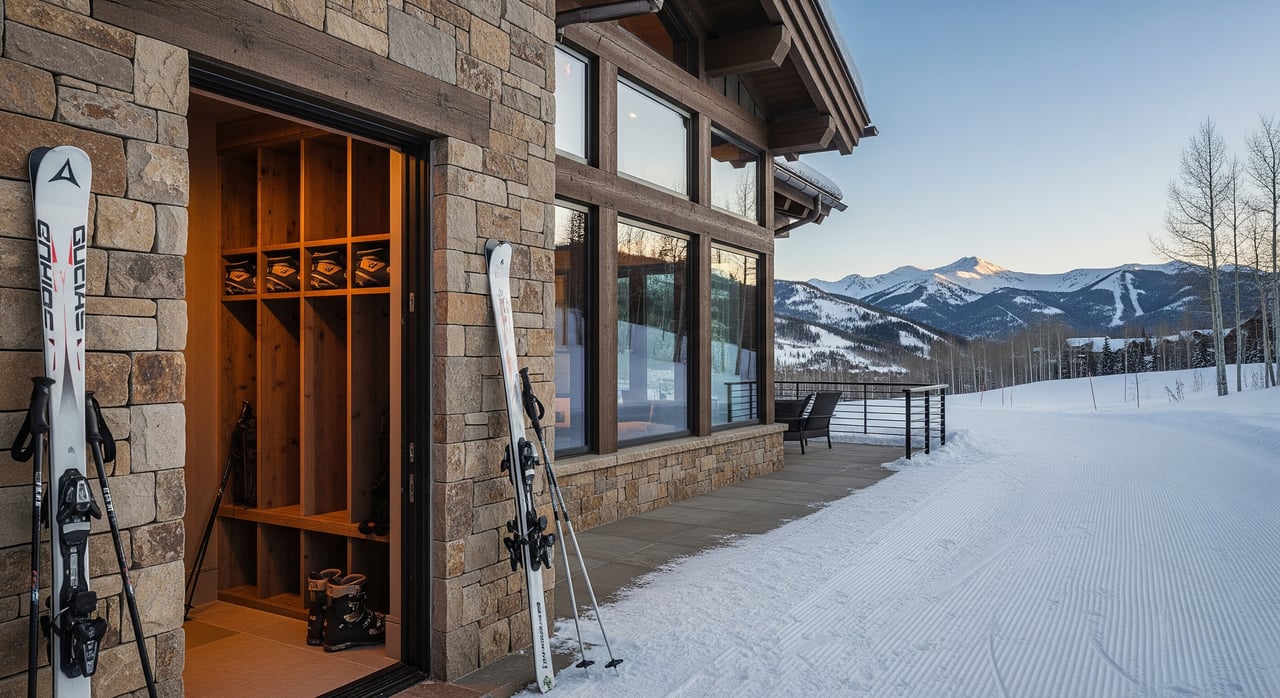
The most convenient. You finish a run and arrive at a slope-side door or a ski room entry. These are rare and command premium pricing.
Ski-to-short-walk
Very common in Vail Village. You ski to within a short distance of the building, remove skis, and walk a brief segment on a maintained path or stairs.
Walk-to-gondola
Also common. You carry gear from your building to Gondola One. Many listings still say “ski access,” but the route is not skiable all the way to the door.
Hotel and valet models
Some hotels and high-end condos operate a ski valet or have interior routes from a ski room to the slopes. These services reduce friction even when the door is not directly on a run.
Seasonal and operational realities
Lift hours and run openings
Access works when lifts and routes are open. Lift schedules change during the season, and late-day skiing back to base may be limited. Always confirm current hours and typical closing patterns for your dates.
Snowmaking and grooming
Base corridors rely on snowmaking and grooming. Early and late season access can vary. Peripheral ramps and stairs can be bare, icy, or temporarily blocked depending on weather and snow removal.
After-hours and summer
After lifts close, skiing back is usually not possible. In summer, there is no ski access. Treat “ski-in/ski-out” as a winter-only feature.
How listings overstate the claim
- “Near the Gondola” or “Minutes to Gondola” can mean a scenic walk through pedestrian zones, not a skiable route.
- “Ski access” may involve crossing a plowed plaza, climbing stairs, or carrying skis over an un-skiable gap.
- “Doorstep skiing” and “walk to lifts” are not interchangeable. The first implies true ski-to-door, the second does not.
A buyer’s checklist for Vail Village access
Use this to compare apples to apples when you tour or evaluate listings.
Map and route verification
- Request a winter aerial or slope map that shows the exact route from the nearest run or lift to the building entrance.
- Measure the horizontal distance from door to run or lift in feet or meters, plus estimated walk time in winter boots.
- Identify obstacles: stairs, paved sections, pedestrian plazas, roads, bridges, or private property that breaks a ski line.
Operational details
- Confirm which lift provides the nearest access, typically Gondola One for Vail Village, and ask for current-season hours.
- Verify the route is in-bounds and resort-sanctioned. Avoid any shortcut that crosses restricted or private property.
- Ask how snowmaking and grooming affect the route, especially early and late season.
Building and HOA specifics
- Check for ski lockers, boot dryers, ski valet, and slope-side entrances. Note locker size and location relative to the exit.
- Ask about snow and ice management on walkways and steps that you will use in boots.
- Confirm elevator access from the ski entrance to your floor.
Practical convenience
- End-of-day return: can you ski back when lifts are open? If you miss last chair, is the walk safe, lit, and manageable?
- Winter surfaces: will you carry skis across icy or plowed gaps regularly?
- Off-season appeal: remember that “ski-in/ski-out” adds value in winter; judge summer features on their own merits.
Safety and legal
- Ensure any part of the route is resort-managed where applicable. Do not rely on unapproved paths.
- Ask the HOA about insurance or rules related to slope access through or next to the complex.
Questions to ask before you write an offer
- Can you provide a winter-season map or GPS track showing the exact ski route from the nearest lift or run to the property entrance?
- Is the route entirely in-bounds and maintained by the resort, or does it cross private property or pedestrian-only areas?
- How many feet or meters and how many minutes is the walk or ski from the door to the gondola in typical winter conditions?
- Are there stairs, paved gaps, or zones where skiing is not possible and you must carry skis? If so, please describe.
- What are building or HOA policies for ski storage, boot drying, ski valets, and slope-side access?
- How do snowmaking and grooming schedules affect access to this route in early and late season?
- Are there times of day or periods in the season when skiing in or out is not possible due to lift closures or maintenance?
- Can I do a winter walkthrough to test the route during normal operating hours?
- Are any planned projects or changes expected that could alter access in future seasons?
How to compare two “ski-in/ski-out” listings
- Time each route door-to-lift and lift-to-door during normal operating hours.
- Note how much of the path is skis on versus boots on. Record the number of stairs.
- Compare amenities that reduce friction, like a staffed ski valet or a heated, slope-side locker room.
- Consider your day-to-day: morning departures with kids, afternoon returns, and late arrivals after last chair.
Setting the right expectations
- Treat “ski-in/ski-out” as a winter convenience, not a year-round feature.
- Expect more variability early and late season when snowmaking drives corridor openings.
- In a pedestrian village, continuous doorstep skiing is uncommon; most access relies on designated corridors and entrances.
A local advisor can save you time
When every minute of vacation counts, the difference between a true ski-to-door and a short but awkward walk matters. A local team can verify the exact route, confirm building amenities, and coordinate a winter walkthrough so you know what you are buying. If you want clear, candid guidance on Vail Village ski access and how it affects value and rental appeal, connect with Kyle Denton for trusted, concierge-level advice.
FAQs
What does “ski-in/ski-out” mean in Vail Village?
- It signals on-mountain access without a vehicle, but can range from true ski-to-door to a short winter walk to Gondola One via designated corridors.
How important are lift hours to ski access?
- Very. Access works when lifts and routes are open; late-day or after-hours returns may require walking instead of skiing.
Can I ski through Vail Village streets to my condo?
- No. The core is pedestrian-focused. Skiing is routed through designated access points, not through main streets or plazas.
Is early or late season access reliable?
- It varies. Snowmaking and grooming support base areas, but peripheral paths can open late, be icy, or close earlier.
What building features make access easier?
- Slope-side ski rooms, heated lockers, boot dryers, ski valet, and well-maintained stairs or ramps reduce daily friction.
How do I verify a listing’s ski route?
- Ask for a winter map or GPS track, measure distance and walk time, identify obstacles, and do a winter walkthrough during lift hours.